

Pro Tip: The Reverse Sear for Holiday Roasts (Smoke Low, Rest, Then Sear Hot)
The holiday roast is the most expensive thing you'll cook all year, it's on a schedule, and everybody is watching. The reverse sear is the method that takes most of the pressure off. This is one of the bonus pro tips from the Feast Mode BBQ Box recipe booklet, and it's the method behind both beef centerpieces in that booklet: the Coffee-Crusted Smoked Prime Rib and the Smokey Horseradish Beef Tenderloin.
The method in one line: smoke the roast at 225F until the center hits 115F to 120F, tent it and rest 20 to 30 minutes while the grill climbs to 500F or higher, then sear hard just long enough to build a crust. Aim for 125F to 130F at carving for medium rare. Because the rest comes before the sear, you carve almost immediately, and the roast can wait on your guests instead of the other way around.
If you've reverse seared a steak, this is the same idea scaled up. Our complete guide to reverse searing a steak covers the basics. This tip is about what changes when the cut weighs 3 to 6 pounds and dinner is at 5:00.
Why the Reverse Sear Works for Holiday Roasts
Roast a big cut hot the whole way and the outside cooks long before the center is ready. You end up with a thick grey band under the crust and a small pink circle in the middle. Smoking low first brings the whole roast up evenly, so you get pink from edge to edge. Then a short blast of high heat builds the crust without pushing heat deep into the meat again.
For a host, the bigger win is timing. The slow part of the cook can finish early, the roast rests on the counter, and the part that has to happen at the last minute takes about ten minutes. That's a far easier dinner than trying to time a hot oven roast to the minute.
The Three Steps
1. Smoke Low
Set the smoker to 225F, or 225F to 250F for a tenderloin, with oak or pecan. Put a leave-in thermometer in the thickest part of the roast, away from any bone, and cook to 115F to 120F. Go by the thermometer, not the clock. A thick roast can take much longer than a thinner one of the same weight.
2. Rest First
Pull the roast, tent it loosely with foil and let it rest 20 to 30 minutes. Use that time to get the grill as hot as it'll go, or to light a second grill just for the sear. This is the step people skip, and it's the one that makes the rest of the dinner easy.
3. Sear Hot
Brush the outside lightly with melted butter or oil and sear over 500F to 550F direct heat, turning until every side is browned. The center climbs only a few degrees here, because the sear is about crust, not cooking. Then carve.
Season the night before.
Rufus Teague Steak Rub leads with coarse salt, so it doubles as a dry brine. Season the roast 12 to 24 hours ahead and refrigerate it uncovered on a rack. The salt seasons deeper and the surface dries out, which is exactly what a hard sear needs. The rub has a little brown sugar and ground coffee in it, so watch the sear closely and move the roast if the crust starts to scorch.
Holiday Roast Reverse Sear Chart
| Prime rib (bone-in, 5 to 6 lbs) | Beef tenderloin (center-cut, 3 to 4 lbs) | |
|---|---|---|
| Smoker temp | 225F | 225F to 250F |
| Smoke to | 115F to 120F | 115F to 120F |
| Typical smoke time | 3 to 4 hours | 60 to 75 minutes |
| Rest | 20 to 30 minutes, before the sear | Before the sear while the grill heats, then 10 to 15 minutes after |
| Sear | 500F to 550F, 6 to 10 minutes total | 500F, 1 to 2 minutes per side |
| Medium rare | 125F to 130F at carving | Pull around 125F |
| Wood | Oak or pecan | Oak or pecan |
A tenderloin is long and thin, so it carries more heat into the rest after a sear than a big prime rib does. That's why it gets a short rest after the sear as well. For every doneness level on prime rib, from rare to medium well, see the prime rib cheat sheet.
For food safety, USDA guidance for whole cuts of beef is 145F with a three minute rest. Serving a roast medium rare is a personal call, and it's yours to make knowingly.
A Dinner-Day Timeline for a 5:00 PM Prime Rib
| Time | What you're doing |
|---|---|
| The night before | Season with Rufus Teague Steak Rub and refrigerate uncovered on a rack. |
| 11:00 AM | Pull the roast from the fridge. Light the smoker and bring it to 225F. |
| 12:00 PM | Roast goes on, bone side down, leave-in probe in the center. |
| 3:00 PM | Start checking. Thickness, not weight, decides when it's done. |
| 3:30 to 4:00 PM | Pull at 115F to 120F. Tent and rest. Make the horseradish cream if you haven't. |
| 4:30 PM | Grill to 500F or higher. Sides go in the oven. |
| 4:45 PM | Butter the outside and sear 6 to 10 minutes. |
| 5:00 PM | Carve and serve. |
Build in a cushion. If the roast finishes early, it can rest tented for longer while you wait, and you can stretch that toward an hour. If it runs late, you lose nothing but the cushion. Either way, the sear doesn't start until the table is close.
Reverse Sear Mistakes That Cost You a Holiday Roast
| The mistake | What happens | The fix |
|---|---|---|
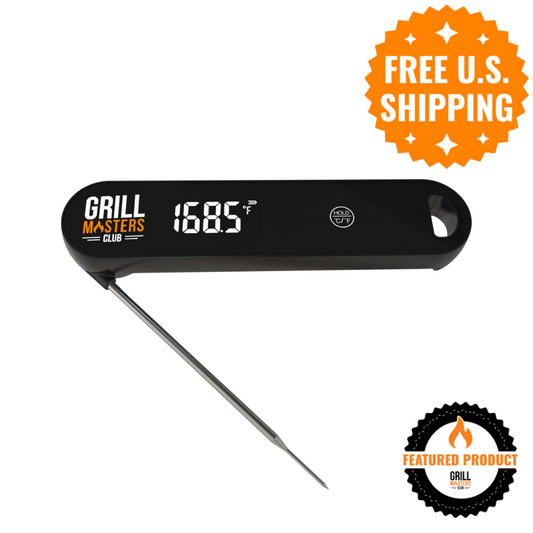
| Cooking by the clock | You pull a thick roast too early or a thin one too late | Use a leave-in probe and a digital instant-read thermometer to confirm in two other spots. |
| Smoking to your target temperature | You wanted medium rare and served medium | Pull at 115F to 120F. The rest and the sear do the rest. |
| Searing on a grill that isn't hot yet | A slow sear cooks the edges grey and the crust stays weak | Get the grill to 500F or higher before the roast goes back on. |
| Spritzing a roast you plan to sear | A wet surface steams before it browns | Skip the spray bottle on beef roasts. More in When to Spritz (and When to Skip It). |
| Resting again after a long prime rib sear | The crust goes soft and the roast cools on the board | The rest already happened. Carve after a few minutes. |
| An uneven tenderloin | The thin tail overcooks before the center is ready | Buy center-cut, or fold the thin end under and tie it with butcher's twine. |
What to Serve With It
Rich beef wants something sharp next to it, and horseradish is the classic for a reason. Smokey Horseradish Sauce by Torchbearer Sauces is real horseradish with garlic and chipotle smoke. Use it straight as a condiment, or stir it half-and-half into sour cream for a steakhouse-style cream. On the tenderloin in the Feast Mode booklet, a thin layer goes on before the rub, too.
Want more ideas for the plate? See our smoked prime rib with horseradish sauce, the reverse seared beef tenderloin video and the five sides to serve with prime rib. Leftovers belong in the perfect prime rib sandwich.
Frequently Asked Questions
Do you rest a roast before or after a reverse sear?
Before. Pull the roast off the smoker, tent it loosely with foil and rest it 20 to 30 minutes while the grill heats to 500F or higher. Then sear. Because the roast already rested, you can carve almost right away.
What temperature do you pull prime rib for a reverse sear?
Smoke at 225F until the center reaches 115F to 120F. The center climbs only a few degrees during the sear, so aim for 125F to 130F at carving for medium rare.
How do you reverse sear a beef tenderloin?
Smoke it at 225F to 250F until the center reaches 115F to 120F, usually 60 to 75 minutes for a 3 to 4 pound center-cut roast. Sear over high direct heat for 1 to 2 minutes per side, pull around 125F for medium rare, then rest 10 to 15 minutes and slice.
Can you hold a roast before searing if dinner runs late?
Yes, that's the biggest advantage of the reverse sear for hosts. After the smoke, the roast can rest tented for 20 to 30 minutes, and you can stretch that toward an hour if the table isn't ready. The sear takes about ten minutes, so it happens when your guests sit down, not before.
Why reverse sear instead of searing first?
Searing first, or roasting hot the whole way, cooks the outside long before the center is ready, leaving a thick grey band under the crust. Cooking low first brings the whole roast up evenly, so you get pink from edge to edge with a crust on the outside.
How hot should the grill be for the final sear?
500F to 550F, or the hottest direct zone you can build. The sear is about crust, not cooking the center, so you want it fast: 6 to 10 minutes total for a prime rib and a few minutes total for a tenderloin.
The Holiday Roast Lineup, in One Box
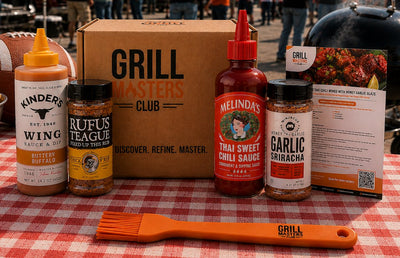
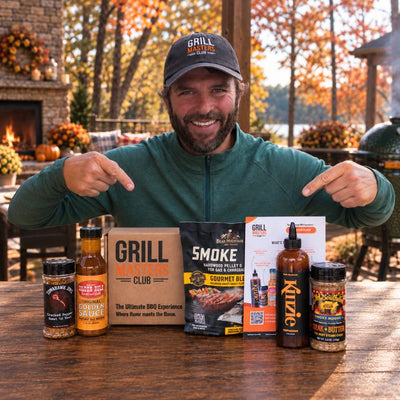
The Feast Mode BBQ Box brings together Rufus Teague Steak Rub, Smokey Horseradish Sauce by Torchbearer Sauces, Garlic & Herb Seasoning by Rainier Foods, Drunken Pineapple BBQ Sauce by Whiskey Bent BBQ and the Grill Masters Club Spray Bottle, plus a recipe booklet with the full prime rib and beef tenderloin recipes behind this tip. Ships free in the US.
Going all in on prime rib? The Ultimate Prime Rib Kit adds the au jus, butcher's twine and a full set of seasonings. Giving a steak lover a gift? The Upper Crust Steak Kit is a reverse sear gift set with a thermometer.
A holiday roast is a lot of pressure for a cook you make once or twice a year. A Grill Masters Club subscription gets you the reps in between: 5+ full-size sauces, rubs and tools you typically won't find at the supermarket, with recipes and pro tips like this one written around each box.
Holiday Beef School
Discover. Refine. Master.
Join 100,000+ Grill Masters
Get weekly recipes, pro tips, and exclusive deals sent straight to your inbox. Plus your free Pit Card download and 10% off your first order.