How to Grill the Perfect Steak Every Time: A Grill Master’s Guide
Grill steak over direct heat at 500°F to 600°F for roughly 3 to 5 minutes per side on a 1.25 to 1.5 inch cut, and pull it 5°F to 10°F below your target doneness. For medium rare, pull at about 125°F and rest 5 to 10 minutes while carryover cooking carries it to 130°F to 135°F. Anything thicker than 1.5 inches is a better candidate for the reverse sear.
If there's one thing every backyard griller wants to master, it's steak. That sizzling sear, the crust that crunches just right, and the juicy pink center that makes your guests close their eyes and nod in approval. That's the stuff of grilling glory.
We've spent years behind the flames, and whether we're working with a well-marbled ribeye, a tender filet, a bold NY strip, or a gorgeous picanha, the rules are the same: respect the beef, trust the process, and know your fire. Here's our guide to grilling the perfect steak every single time.
What's in this guide

1. Choose Your Cut, Know Your Cut
Not all steaks are created equal. Each cut has its own strengths, and your approach should match the meat.
| Cut | Flavor and texture | Best grilling method | Best doneness |
|---|---|---|---|
| Ribeye | Rich and fatty with heavy marbling and an eye of fat in the center | High-heat direct sear, watch for flare-ups as fat renders | Medium rare to medium |
| Filet Mignon | Lean and ultra-tender, mild in beef flavor | Hot sear, then finish with compound butter or a sauce | Rare to medium rare |
| New York Strip | Firm and balanced with a fat strip along one edge | Direct sear, plus 30 seconds standing on the fat cap | Medium rare |
| Picanha | Beefy sirloin cap with a thick fat cap, a Brazilian barbecue staple | Grilled whole, or sliced thick and skewered in a C shape | Medium rare |
2. Let It Breathe
Take your steaks out of the fridge at least 30 to 45 minutes before grilling so they come up toward room temperature. A cold steak that goes straight to the grill cooks unevenly, giving you a gray band around a cold center.
Pat the steaks dry with paper towels before seasoning. Moisture is the enemy of crust, because the surface has to shed water before it can brown.
3. Season It, Baby
Keep it simple: coarse kosher salt and freshly cracked black pepper are your best friends when it comes to grilling steak. A pre-mixed 50/50 coarse salt and 16 mesh pepper blend gets you the classic Texas-style SPG base in one shaker. For added flavor, we sometimes rub our steaks with a bit of granulated garlic.
If you're feeling adventurous, reach for a rub built to form a crust rather than one built for low and slow. Two that earn their spot on steak night:
- Roasted Garlic Peppercorn Seasoning by Char Crust for a savory, peppery bark on ribeye and strip.
- Java Coffee Rub by Char Crust when you want a darker, roastier crust on a thicker cut.
- Mis' Rubin's Magic Steak Marinade if you'd rather marinate a leaner cut like sirloin or flank overnight.
Pro Tip: Season your steaks at least 40 minutes before grilling, or right before they hit the grill. That in-between window is the one to avoid, because salt has pulled moisture to the surface but hasn't reabsorbed yet.
Want to go the extra mile? Try dry-brining your steak.
If you've got the time, dry brining your steaks overnight can be a flavor game-changer. The technique improves both flavor and texture by letting salt penetrate deep into the meat.
Here's how to dry-brine your steak:
- Generously season your steaks with coarse kosher salt on all sides.
- Place them on a wire rack set over a baking sheet so air can circulate.
- Refrigerate uncovered overnight, or for at least 8 to 12 hours.
The salt draws out surface moisture, which then dissolves and reabsorbs into the steak, seasoning it more evenly. It also helps break down muscle proteins slightly, which means a more tender bite and a better crust during searing. As a bonus, the surface dries out in the fridge, and a dry surface browns faster.
Pro Tip: Skip additional salting right before grilling. The dry brine has already done the work. Just hit your steaks with fresh cracked black pepper and you're ready for the fire.
4. Prep Your Grill
Whatever you're cooking on, the goal is the same: one blazing hot zone for searing and one cooler zone where a steak can finish without burning. If you're new to running two zones on charcoal, our guide to controlling heat on a charcoal grill walks through four ways to set it up.
- Charcoal grill: build a two-zone fire. Bank hot coals on one side and leave the other side empty for indirect cooking.
- Smoker or pellet grill: ideal for the reverse sear (here is our full guide on how to reverse-sear a steak). Smoke low and slow at 225°F to 250°F to put smoke flavor on the meat, pull around 115°F internal, then finish with a hot sear to build the crust.
- Gas grill: preheat all burners on high for at least 15 minutes, then clean and oil the grates. Once it's hot, kill the burners on one side to create your indirect zone.
Clean grates matter more than most people think. Old carbon buildup sticks to steak and tears the crust when you flip. Our grill cleaning and maintenance guide covers the routine, and if you're still shopping for the right cooker, start with which grill should I buy.
5. Master the Sear
Searing isn't just for looks. High heat drives the Maillard reaction, the chemistry between amino acids and sugars that creates hundreds of new aroma and flavor compounds on the surface of the meat. That browned crust is where most of a steak's roasted, savory flavor lives.
- Get your grill hot. You want 500°F to 600°F at the grate for searing.
- Place the steaks directly over the flame and leave them alone. Don't move them too much, and let the crust develop.
- Use a set of long heat-resistant tongs rather than a fork, which punctures the crust and lets juice escape.
- For an even edge-to-edge sear, cook on cast iron right on the grill with a spoonful of beef tallow. A tallow spray is the low-mess version when you're working directly on grates.
| Steak thickness | Time per side | Notes |
|---|---|---|
| 3/4 inch | 2 to 3 minutes | Moves fast, stay at the grill |
| 1 inch | 3 to 4 minutes | Standard steakhouse cut |
| 1.25 to 1.5 inches | 4 to 5 minutes | Finish over indirect heat if the outside darkens early |
| 1.75 inches and up | Reverse sear | Indirect to 115°F, then 60 to 90 seconds per side over high heat |
Times are a starting point, not a rule. Grill temperature, wind, lid position and the steak's starting temperature all move the needle, which is why the thermometer in the next section is the part that actually decides doneness.
6. Use a Thermometer, Not a Guess
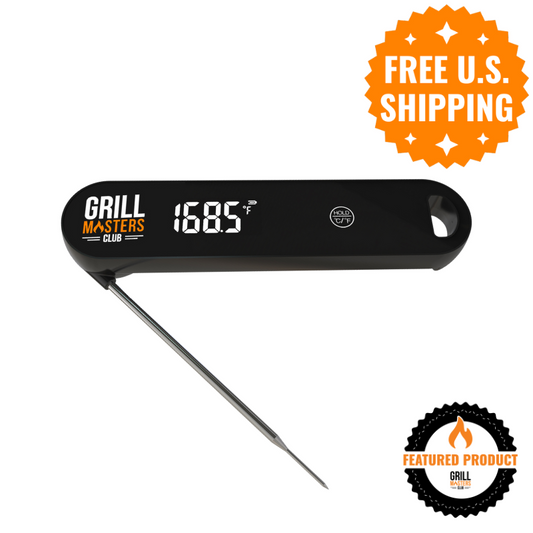
Forget the poke test. A digital instant-read meat thermometer is the single piece of gear that changes steak night the fastest. Probe the thickest part from the side, avoiding bone and pockets of fat.
| Doneness | Pull from the grill at | Final temp after resting | What you'll see |
|---|---|---|---|
| Rare | 115°F to 118°F | 120°F to 125°F | Cool red center, very soft |
| Medium Rare | 123°F to 128°F | 130°F to 135°F | Warm red center, the steakhouse standard |
| Medium | 133°F to 138°F | 140°F to 145°F | Warm pink center, firmer bite |
| Medium Well | 143°F to 148°F | 150°F to 155°F | Slight pink, noticeably drier |
| Well Done | 153°F and up | 160°F and up | No pink (but please don't) |
These are cooking preferences, not safety guidance. The USDA recommends a minimum internal temperature of 145°F plus a three minute rest for whole cuts of beef. Here's the full Safe Minimum Internal Temperature Chart from the USDA.

7. Don't Skip the Rest
Rest your steaks for 5 to 10 minutes after grilling so the juices redistribute instead of running out onto the board.
Pro Tip: Once you pull your steaks from the grill, the internal temperature keeps climbing another 5°F to 10°F from carryover cooking. To hit your target doneness, pull a few degrees early, tent loosely with foil, and rest 5 to 10 minutes before slicing. Thicker steaks carry over more than thin ones.
8. Cut It Right
Always slice against the grain. Cutting across the muscle fibers shortens them, which makes even tougher cuts noticeably more tender. Find the direction the fibers run, then cut perpendicular to them.
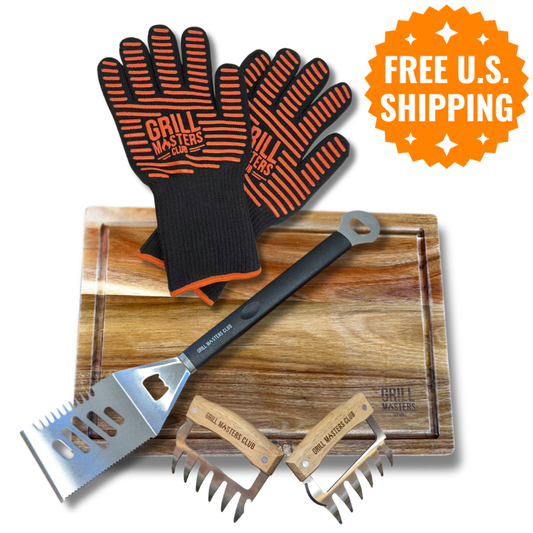
For picanha, slice into 1 inch steaks across the grain before grilling, or slice thin after cooking the whole roast. A stable board with a juice groove keeps the resting liquid off your counter, and the BBQ Essentials Bundle pairs one with gloves, claws and a spatula.
Steak-Specific Notes
Ribeye
- Watch for flare-ups as the fat renders, and move the steak to the cool zone when flames climb.
- If the spinalis (the cap muscle) is falling away, tie it with butcher's twine to keep the steak tight and compact while grilling.
- Cast iron plus beef tallow on the grill gives you an even sear across the whole surface.
- Let it rest a little longer so the rendered fat settles back into the meat.
Filet Mignon
- Wrap in bacon for extra fat and flavor, since the cut has very little of its own.
- Don't overcook it. A filet should always land rare to medium rare.
New York Strip
- Give the fat cap side special attention. Stand the steak on that edge and sear it for 30 seconds.
- It rewards a compound butter during the rest. Blue cheese and roasted garlic are both worth trying.
Picanha
- Score the fat cap in a crosshatch, but don't trim it off.
- Season with nothing but coarse rock salt for the traditional Brazilian approach.
- Slice, skewer into a C shape and grill slowly, basting with the rendered fat as it drips.
Common Steak Mistakes (And the Fix)
| Mistake | Why it hurts | The fix |
|---|---|---|
| Grilling straight from the fridge | Gray overcooked band around a cold center | Temper 30 to 45 minutes on the counter |
| Wet steak surface | The grill steams the meat before it can brown | Pat dry with paper towels right before seasoning |
| Salting 10 minutes ahead | Surface is wet with drawn-out moisture at the worst moment | Salt 40+ minutes ahead, or immediately before grilling |
| One-zone fire | Nowhere to move a steak that browns too fast | Build a hot side and a cool side |
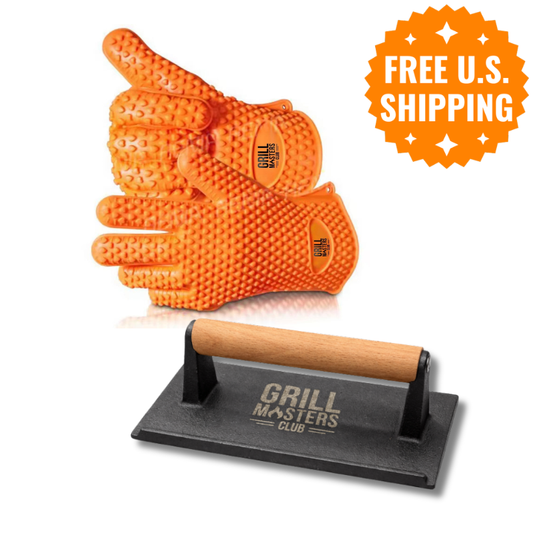
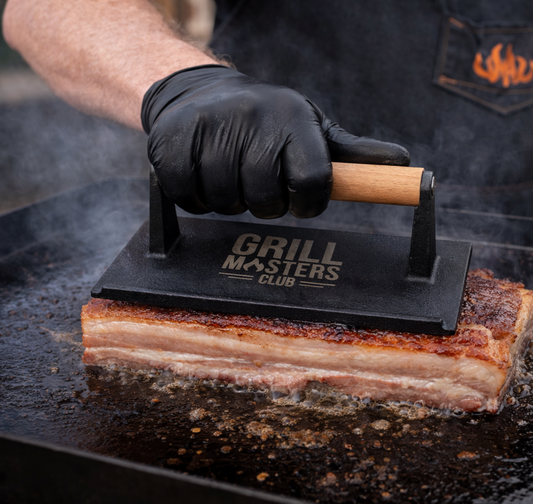
| Constant flipping and pressing | Crust never sets and the press squeezes out juice | Flip once or twice, and keep the spatula off it |
| Guessing doneness | The poke test is unreliable across different cuts | Probe from the side with an instant-read thermometer |
| Slicing immediately | Juice runs onto the board instead of staying in the meat | Rest 5 to 10 minutes, tented loosely |
| Slicing with the grain | Long muscle fibers make every bite chewier | Find the grain and cut across it |
The Steak Gear We Actually Reach For
Digital Instant-Read Thermometer
The one tool that ends the guesswork. Probe from the side and pull at your number.
Shop nowGolden Rule 100% Beef Tallow
High smoke point fat for searing in cast iron, from one of the oldest barbecue joints still operating in the USA.
Shop nowBarebones 12" Cast Iron Skillet Griddle
Edge-to-edge contact for a full-surface crust, right on the grill or over open fire.
Shop nowLane's 50/50 Salt & Pepper Blend
Coarse salt and 16 mesh black pepper, the classic steak base in one shaker.
Shop nowServing a crowd? A bold steak and chop sauce on the table covers the people who want one. Everything above lives in the Pitmaster Shop, alongside our full sauces and rubs and cast iron collections.
Shopping for a steak guy? Skip the gadget he already owns. Our BBQ gift guide sorts the best gifts for grillers by budget, from barrel-aged smoking wood to a two-year BBQ subscription.
Watch: Picanha on the Grill
Stock Your Pit for Steak Night
The Pitmaster Shop is where our team keeps the rubs, sauces, cast iron and tools we actually cook with. Or build your own bundle of five and pick exactly what hits your grill next. Both ship free in the US.
Shop the Pitmaster Shop Build a BundleSteak Grilling FAQ
What temperature should the grill be for steak?
Aim for 500°F to 600°F at the grate for searing. Below about 450°F the steak cooks through before a real crust forms, and above 650°F the exterior can scorch before the center catches up on anything thicker than an inch.
How long do you grill a 1-inch steak?
About 3 to 4 minutes per side over direct high heat for medium rare. Pull it at 123°F to 128°F and let carryover cooking finish it during the rest.
Should you close the grill lid when cooking steak?
For steaks under about 1.5 inches, leave the lid open over the hot zone so the surface browns without the interior racing ahead. For thicker cuts, sear with the lid open and then close it over the indirect side to finish, which lets the grill work like an oven.
How many times should you flip a steak?
Once is the traditional answer and it works well. Flipping every 45 to 60 seconds also works and can cook the interior slightly more evenly. What matters is that you leave the steak alone long enough for a crust to set before it moves, and that you never press down on it.
Should you oil the steak or the grates?
Oil the grates. A thin coat of high smoke point oil or tallow on hot, clean grates prevents sticking. Oiling the steak itself mostly causes flare-ups as it drips into the fire.
How long should a steak rest?
Five to 10 minutes for most grilling steaks, tented loosely with foil. Thicker cuts sit closer to 10 minutes. Resting lets the juices redistribute and lets carryover cooking bring the steak to its final temperature.
Why is my grilled steak tough?
The usual culprits are overcooking, slicing with the grain instead of against it, and skipping the rest. Cut choice matters too, since lean cuts like sirloin and flank turn tough faster past medium rare than a well-marbled ribeye does.
Is reverse searing better than searing first?
For thick steaks, generally yes. Cooking gently to about 115°F and searing at the end gives you a more even pink from edge to edge and a drier surface that browns faster. For steaks under 1.25 inches, a straight hot sear is quicker and works just as well.
Final Thoughts
Grilling the perfect steak isn't about fancy tools or secret sauces. It's about respecting the process, knowing your fire, and understanding your beef. Armed with the right knowledge and a little practice, you can deliver steakhouse results right from your backyard.
So next time you're firing up the grill, take your time, trust your instincts, and remember: a great steak is earned, not rushed.
Now get out there and grill like you mean it.
Keep Reading
Join 100,000+ Grill Masters
Get weekly recipes, pro tips, and exclusive deals sent straight to your inbox. Plus your free Pit Card download and 10% off your first order.