
Texas BBQ Deep Dive: Brisket, Smoke, Bark, and the Meat-Forward Craft
Texas BBQ Deep Dive: Brisket, Post Oak Smoke, and the Technique Behind the “Meat-First” Style
Texas barbecue isn’t one single recipe—it’s a philosophy. In its most iconic form (especially Central Texas), Texas BBQ is meat-forward, technique-driven, and intentionally simple: clean smoke, steady heat, and brisket that needs no cover story.
This deep dive is built to help you cook Texas-style brisket with confidence—whether you’re brand new to smoking or you’ve already done a few all-night cooks and want better bark, cleaner smoke, and more consistent slices.
Quick note: Grill Masters Club doesn’t sell grills. We focus on the tools, prep gear, sauces, and rubs that make every cook easier and more consistent—no matter what pit you use. If you’re still deciding on a grill type, start here: Which grill should I buy? (decision framework).
Table of Contents
- What makes Texas BBQ “Texas”?
- Texas BBQ regions at a glance
- Central Texas brisket: the core style
- Brisket anatomy: flat vs point (and why it matters)
- How to choose a brisket (what to look for)
- Trimming brisket for better bark and even cooking
- Texas seasoning: salt, pepper, and restraint
- Why post oak? Clean smoke fundamentals
- Time, temperature, and the brisket stall
- Wrapping: butcher paper vs foil (Texas Crutch)
- Resting: the most underrated “step”
- Slicing brisket correctly (against the grain)
- Common brisket mistakes (and fixes)
- Sauce in Texas: optional, not the headline
- FAQ
What Makes Texas BBQ “Texas”?
If you want a clean definition, Texas barbecue is typically built around:
- Beef-forward cooking (especially brisket)
- Simple seasoning (often just salt + pepper)
- Wood smoke that stays clean (post oak is iconic in Central Texas)
- Technique over sauce (sauce is optional and usually served on the side)
- Texture targets: set bark, rendered fat, tender slices that still hold together
Want a broader “map” before you zoom in? Link this phrase once near the top of your regional cluster: Definitive Guide to American BBQ Styles.
Texas BBQ Regions at a Glance
Texas has distinct regional fingerprints. Even if you’re cooking “Texas-style brisket,” it helps to understand how the rest of the state approaches smoke.
Central Texas
- Brisket as the centerpiece
- Salt + pepper seasoning
- Post oak is common
- Meat sold by the pound, sauce optional
East Texas
- Sweeter, sauce-forward traditions show up more often
- Chopped and pulled meats are common
- Often closer in feel to “Southern” BBQ styles
South Texas / Border Influences
- Barbacoa and cross-cultural traditions
- Unique seasonings and serving styles
West Texas
- Live-fire cooking traditions appear more often
- Direct heat can be a bigger piece of the identity
Most “Texas brisket” guides only cover the cooking steps. This pillar goes deeper—because the best results come from understanding why each step exists.
Central Texas Brisket: The Core Style
Central Texas brisket is simple on purpose. The goal isn’t to hide the beef—it’s to highlight it. That means your success depends on a few fundamentals:
- Even airflow and steady pit temps
- Clean smoke (thin and pleasant, not thick and bitter)
- Proper trimming so the brisket cooks evenly
- Patience through the stall
- Resting long enough for slices that stay juicy
Texas brisket isn’t complicated. It’s unforgiving of sloppy fundamentals.
Nail the basics—trim, season evenly, run clean smoke, manage the stall, rest correctly—and your “simple” brisket will taste like a masterclass.
Brisket Anatomy: Flat vs Point (And Why It Matters)
A whole packer brisket is two muscles that behave differently:
The Flat
- Leaner, more uniform
- Great for clean slices
- Can dry out if overcooked or under-rested
The Point
- More intramuscular fat
- Renders richer and stays juicy longer
- Often used for chopped brisket or burnt ends
This matters because “done” doesn’t feel the same across the entire brisket. The point may feel perfect while the flat still needs time—or the flat may be tender while the point is still tightening up.
The solution isn’t guessing. It’s cooking until the brisket is probe-tender in the thickest parts of the flat and point, then resting long enough for the texture to stabilize.
How to Choose a Brisket (What to Look For)
The easiest brisket mistake happens before you ever light the fire: buying the wrong cut. A great cook can save a decent brisket, but a weak brisket limits your ceiling.
Look for These Signs
- Whole packer (flat + point intact)
- Good marbling across the flat
- Flexible feel when you pick it up (a looser brisket often indicates better fat distribution)
- Fat cap that isn’t overly thick (you’ll trim it, but extreme thickness can be a red flag)
Common Buyer Mistakes
- Buying only a flat because it looks “easy” (it’s usually harder to keep juicy)
- Choosing the biggest brisket without considering your cooker space
- Skipping marbling inspection (especially important for the flat)
If you’re new: choose a brisket that fits your pit with room for airflow around it. Crowding the cooker makes temperature and smoke behavior less predictable.
Trimming Brisket for Better Bark and Even Cooking
Trimming isn’t cosmetic—it’s heat management. Your goal is to create a brisket shape that cooks predictably: no thin edges that burn, no thick fat that blocks seasoning, and fewer airflow dead zones.
Trimming Goals
- Even thickness where possible
- Rounded edges (sharp corners dry out faster)
- Fat cap reduced so seasoning can work and heat can render fat effectively
- Hard fat removed (it won’t render well; it just blocks heat)
If trimming stresses you out, remember this: you’re not chasing perfection—you’re removing “problems” that create uneven cooking.
Prep gear matters here. Keeping brisket organized during trimming (and not dripping all over your counter) is one of the simplest ways to make brisket days feel less chaotic. If you want to keep your cook area cleaner and faster to reset, link your grill-care hub: Grill brush & cleaning essentials.
Texas Seasoning: Salt, Pepper, and Restraint
Central Texas brisket is famous for a reason: it proves how far fundamentals can take you. In many traditional approaches, the seasoning is just: coarse salt + coarse black pepper (often in a simple ratio).
Why “Simple” Works
- Salt amplifies beef flavor and helps form bark
- Pepper adds a bold, earthy backbone
- Smoke integrates more cleanly without competing flavors
The biggest seasoning mistake is going too light. Texas brisket needs confident coverage because brisket is large, and the bark is part of the experience.
Optional Additions (Still Texas-Appropriate)
- Garlic powder (subtle)
- Onion powder (subtle)
- A small amount of paprika for color (not sweetness)
If you’re building your own rub lineup, this is a perfect place to naturally link your bundle builder: Build Your Own Bundle. Texas brisket rewards having a few go-to rub profiles you can rotate depending on beef quality and cook style.
Why Post Oak? Clean Smoke Fundamentals
Wood choice matters, but smoke quality matters more than the species on the label. Post oak is iconic in Central Texas because it’s often associated with a steady burn and a balanced smoke profile. But you can ruin post oak brisket with one mistake: dirty smoke.
What “Clean Smoke” Actually Means
- Thin (not billowing)
- Pleasant (smells like wood and barbecue, not acrid)
- Stable (not constantly fluctuating due to airflow problems)
How Dirty Smoke Happens
- Wet or green wood
- Not enough airflow
- Smoldering fuel instead of burning clean
- Overloading wood chunks at once
If you only change one thing in your brisket process, make it smoke quality. Dirty smoke can’t be “fixed” later— it becomes the flavor.
Time, Temperature, and the Brisket Stall
Brisket is a long cook because collagen needs time to break down and fat needs time to render. That transformation is what creates tender slices instead of roast-beef texture.
The Stall (What It Is)
Around the mid-cook, brisket often “stalls”—the internal temperature slows down or stops rising for a while. This happens as moisture evaporates from the surface and cools the meat (similar to sweat cooling skin).
The Stall (How to Handle It)
- Do nothing and ride it out (best bark potential, more time)
- Wrap to reduce evaporation and push through (faster, different bark texture)
- Adjust airflow if smoke is getting heavy or temps are unstable
The stall is not a failure. It’s a normal part of the brisket cook. Your job is to stay steady and avoid panic changes.
Wrapping: Butcher Paper vs Foil (The Texas Crutch)
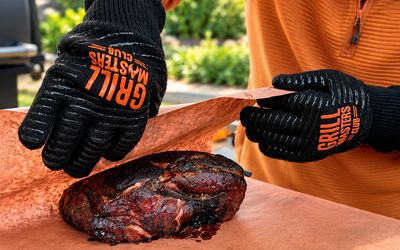
Wrapping is a tool, not a rule. Many Texas-style cooks prefer butcher paper because it can protect the brisket while preserving more bark texture than foil.
Butcher Paper
- Helps push through the stall
- Breathes more than foil
- Often preserves bark better
Foil
- Fastest push through the stall
- Traps more moisture
- Can soften bark significantly
If you want a classic Texas bark, paper is often the better choice. If your priority is speed or you’re fighting dryness, foil can be a useful tool—just understand the tradeoff.
Resting: The Most Underrated Step in Texas Brisket
Resting isn’t just “waiting.” It’s part of the cook. When brisket comes off the pit, internal juices are active and the texture is still stabilizing. A proper rest helps:
- Redistribute juices for cleaner slices
- Relax muscle fibers so brisket doesn’t crumble or shred
- Set the final texture of bark + fat
What a Good Rest Looks Like
- Rest long enough that slicing doesn’t flood the board
- Keep it warm (not hot) so it stays in the ideal texture zone
- Don’t rush just because the cook is “done”
Many “dry brisket” complaints aren’t about cooking too hot—they’re about under-resting or slicing too early.
Slicing Brisket Correctly (Against the Grain)
Even a perfectly cooked brisket can eat “tough” if it’s sliced wrong. Your goal is to slice against the grain so each bite is tender.
How to Slice the Flat
- Identify the grain direction before the cook if possible (a small corner cut helps)
- Slice across the grain in consistent slices
- Adjust thickness: slightly thicker if it’s extremely tender, slightly thinner if it’s tighter
How to Slice the Point
- The grain can shift compared to the flat
- Slice with attention—don’t assume it matches the flat’s direction
- Chop or cube if you’re going for richer bites or burnt-end style pieces
Texture is the Texas test. Great brisket slices should bend without breaking and pull apart with minimal resistance.
Common Brisket Mistakes (And How to Fix Them)
“My brisket is dry.”
- Likely cause: Under-resting, lean brisket, or overcooking the flat.
- Fix: Choose better marbling next time, protect the flat during the cook, and rest longer before slicing.
“My brisket tastes bitter.”
- Likely cause: Dirty smoke (smoldering wood, low airflow, wet wood).
- Fix: Prioritize clean burn and airflow. Use less wood at a time and avoid heavy white smoke.
“My bark is soft.”
- Likely cause: Wrapped too early, too much moisture trapped, or not enough time unwrapped.
- Fix: Let bark set longer before wrapping, and consider butcher paper over foil.
“My brisket won’t get tender.”
- Likely cause: Pulled too early—collagen needs time.
- Fix: Cook to probe tenderness, not a single temperature number. Stay patient through the stall.
“My slices crumble.”
- Likely cause: Overcooked, or sliced while too hot.
- Fix: Rest longer and slice when the brisket has stabilized.
Sauce in Texas BBQ: Optional, Not the Headline
In many Texas traditions—especially Central Texas—sauce is served on the side and used sparingly. That doesn’t mean sauce is “bad.” It means the brisket is expected to stand on its own first.
A great sauce can complement brisket (especially on chopped brisket, sandwiches, or leftovers), but the Texas mindset is: earn the flavor with smoke and technique, then let sauce play a supporting role.
Frequently Asked Questions
What is Texas BBQ known for?
Texas BBQ is best known for beef-forward cooking—especially brisket—simple seasoning (often salt and pepper), clean wood smoke, and a meat-first philosophy where sauce is optional.
What wood is used for Texas brisket?
Post oak is iconic in Central Texas, but the bigger priority is clean smoke. Dry, well-burning wood and steady airflow matter more than the specific species.
Do you have to wrap brisket?
No. Wrapping is a tool to manage the stall and protect moisture. Butcher paper is popular in Texas-style cooks because it can preserve bark better than foil.
What’s the most important part of brisket?
Resting. Many briskets fail at the finish line—sliced too early, before the texture stabilizes and juices redistribute.
Final Thoughts
Texas barbecue looks simple on the surface because it’s built on fundamentals. When you get the details right—trim for even cooking, season with confidence, run clean smoke, stay steady through the stall, and rest long enough—your brisket becomes the proof.
If you’re building a backyard setup around how you truly cook, don’t miss: Which grill should I buy? (ultimate guide). And if you want the full regional overview that supports this Texas pillar, link: The Definitive Guide to American BBQ Styles.
Join 100,000+ Grill Masters
Get weekly recipes, pro tips, and exclusive deals sent straight to your inbox. Plus your free Pit Card download and 10% off your first order.