
How to Smoke Ribs Like You've Been Doing It for 10 Years
Ten years of rib lessons, boiled down to one Saturday.
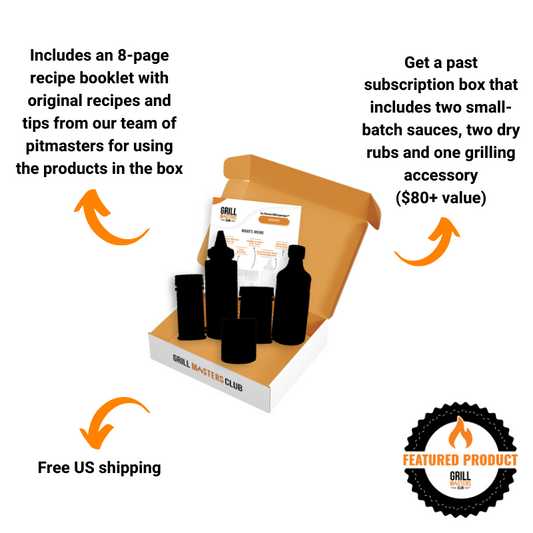
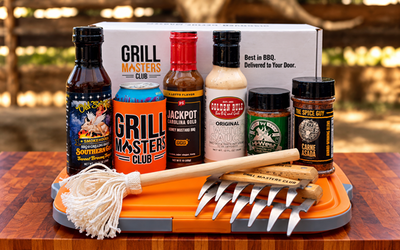
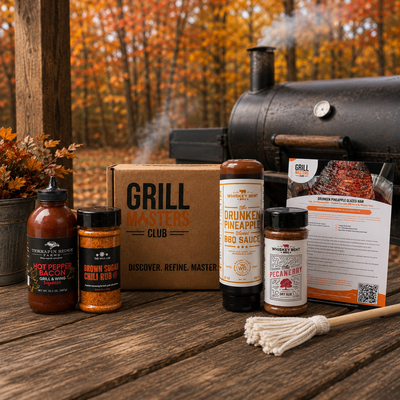
Ribs done right with the Big Rib Energy BBQ Box.
One of the most famous tech founders on the planet recently posted a photo carousel of his backyard cooks with a simple caption: "A decade of smoking meats." There was an offset smoker, a kamado, a rack of glazed ribs, and a row of sausages that looked like they came straight out of a Texas smokehouse. Real respect to anyone who puts in ten years at the pit. That kind of rack doesn't happen by accident.
Here's the twist: you don't need ten years. A decade of rib cooking really comes down to about a dozen decisions. Which cut to buy. How to trim it. What to put on it. How to run your fire. When to wrap, when to sauce, and how to know it's done. Get those right and your first rack can look like your fiftieth.
This guide hands you every one of those decisions, plus something most rib guides skip: exact setups for an offset smoker, a kamado, and a pellet grill, all in one place. Here's the plan:
- Pick the right ribs and trim them
- Pull the membrane, bind, and build bark with layered rub
- Choose your wood and set up your cooker
- Pick a method: 3-2-1, 2-2-1, competition, or no wrap
- Spritz, wrap, sauce, test for doneness, rest, and slice
- Bonus: smoked sausage on the side, and the 10 mistakes we made so you don't have to
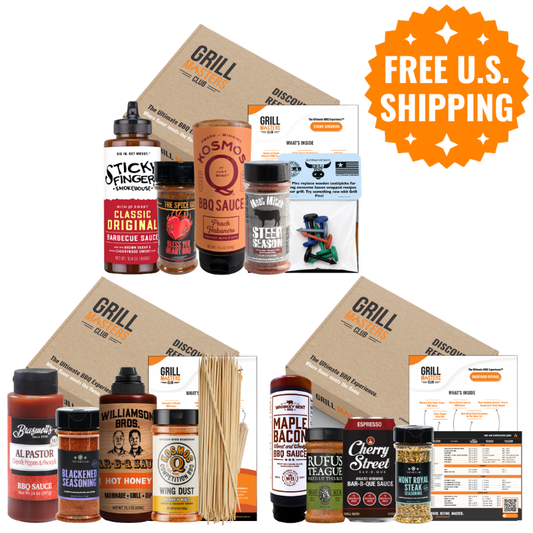
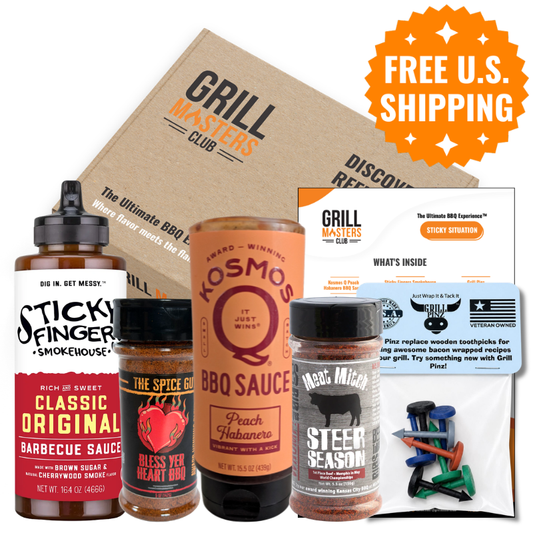
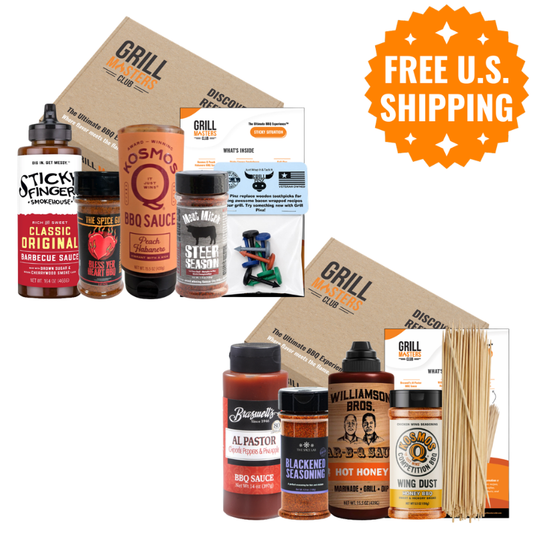
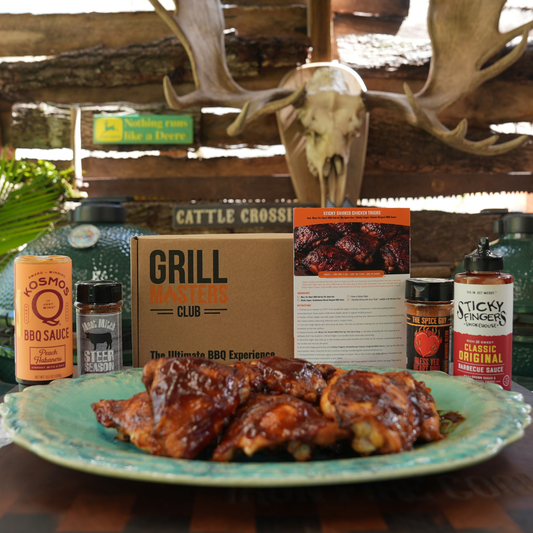
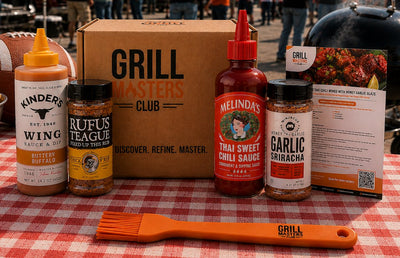
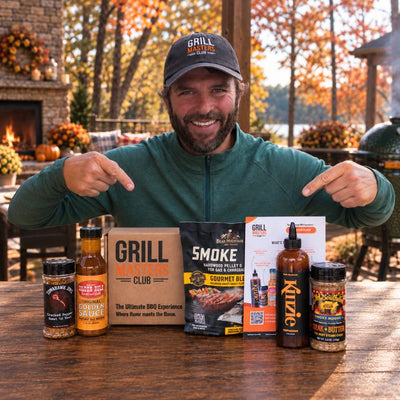
Want everything for this cook in one box? The Big Rib Energy BBQ Box has the competition rub, sauces, spray bottle, mop brush, and the recipe card we built this guide around.

Pick Your Ribs: Baby Back vs St. Louis vs Spare Ribs
Baby back ribs come from the top of the rib cage near the loin. They're leaner, curved, and tender, and they cook faster, usually 4 to 5 hours at 225 to 250°F. Great for a first cook or a weeknight-ish Saturday.
Spare ribs come from the belly side. They carry more fat and connective tissue, which means more flavor and more forgiveness, but they need 5.5 to 7 hours and some trimming.
St. Louis cut ribs are spare ribs trimmed into a neat rectangle, with the rib tips and skirt removed. They cook the most evenly of the three, which is why they're the competition favorite and our pick for this guide.
Two quick notes. Beef plate ribs are a different animal entirely: huge, rich, and closer to brisket in how you cook them. Country style ribs aren't true ribs at all; they're cut from the shoulder and behave more like pork steaks.
Buying tips: skip racks with "shiners" (bone poking through the meat), look for even thickness end to end, and check the label for "enhanced" or "solution added." That pork has been injected with a salt solution, so go lighter on salty rubs.
| Cut | Weight per rack | Serves | Time at 250°F | Best method |
|---|---|---|---|---|
| Baby back | 1.5 to 2.5 lb | 1 to 2 | 4 to 4.5 hr | 2-2-1 or no wrap |
| St. Louis | 2.5 to 3.5 lb | 2 to 3 | About 5 hr | Competition (3-1-1) or paper wrap |
| Spare (untrimmed) | 3.5 to 4.5 lb | 3 to 4 | 5.5 to 6.5 hr | 3-2-1 |
How to Trim Ribs (and Make Your Own St. Louis Cut)
Buying whole spares and trimming them yourself saves money and teaches you the rack. Flip it bone side up. Cut away the flap of skirt meat running across the bones. Then find the line of cartilage where the bones end and the rib tips begin, and cut straight along it. Square up the ends so the rack is an even rectangle.
One trick that pays off every time: round off the thin corners slightly. Thin corners overcook and turn into jerky long before the center is ready. Leave about a quarter inch of surface fat and trim any loose, hanging bits that will burn.
Don't toss the trimmings. Season the rib tips with the same rub and smoke them right next to the rack. They're done in about half the time and make the best pitmaster snack in the backyard.
Remove the Membrane (Yes, Every Time)
The thin, shiny membrane on the bone side gets tough and leathery in the smoker, and it blocks rub and smoke from reaching the meat. Pull it.
Slide a butter knife under the membrane over one of the middle bones until you can get a finger underneath. Grab the loose edge with a paper towel for grip and pull in one slow, steady motion. On a good day it comes off in a single sheet.
If it shreds and won't come off clean, don't fight it for ten minutes. Score it in a crosshatch with the tip of a knife so the rub can get through, and move on.
Binder: Mustard, Oil, or Spray?
A binder is just a thin layer that helps rub stick evenly. You won't taste it after the cook, so don't worry if you hate mustard. Good options include yellow mustard, olive oil, hot sauce, Worcestershire, or a thin coat of mayo, an old competition trick that helps bark brown.
Our favorite shortcut is an oil-based spray like Spritz-It! BBQ Marinade Spray. Mist it on as your binder before the rub, then use the same can to spritz during the cook. The Hickory Smoke flavor is the one to grab for ribs.
Rubs: Build the Bark in Layers
Bark is where a decade of practice shows up first, and the secret is layering.
Salt timing. If your rub is low in salt, dry brine the rack with kosher salt 2 to 12 hours ahead. If your rub already has plenty of salt, just season 15 to 30 minutes before the ribs go on.
Layer like the pros. Start with a savory base, like a salt, pepper, and garlic blend or a dedicated rib rub such as Old Southern BBQ Rib Rub. Then go over it with a sweet competition rub. Heath Riles Competition BBQ Rub is our top layer pick, and it's the rub inside the Big Rib Energy box. For a sweet and savory alternative, Blues Hog Original Dry Rub works beautifully.
Apply from height. Shake rub from about 12 inches above the meat so it falls evenly instead of clumping. Do the bone side first, then the meat side and the edges.
Let it sweat. Wait until the rub looks wet and tacky before the rack goes on. That's the rub pulling moisture from the surface and starting to form the bark.
Sugar caution. Sweet rubs scorch above about 275°F. If you plan to run hot, lean on the savory layer and go light on the sweet one.

Wood and Fuel: What to Burn for Ribs
Pork loves fruitwood with a hardwood backbone. Apple and hickory at roughly a 2 to 1 ratio is the classic rib blend: apple for sweetness and color, hickory for that bacon-like punch. Cherry and pecan are excellent too.
Want something different? Pappy & Company Bourbon Barrel Stave Chunks are oak with caramel and vanilla notes from years of holding bourbon. They're fantastic with sweet rubs and sticky glazes.
What you burn depends on your cooker:
- Offset: wood splits are the fuel. Knotty Wood Almond Splits burn clean, hot, and mild, so they play nicely with pork.
- Kamado: lump charcoal plus 2 to 3 chunks. FireForge Paraguayan Hardwood Lump burns long and steady.
- Pellet: pellets, plus an optional smoke tube for extra smoke.
Myth buster: don't soak your wood. Wet wood steams and smolders, which gives you dirty white smoke. Use dry wood and let it sit near the fire to preheat.

Set Up Your Cooker: Offset vs Kamado vs Pellet
That viral carousel had both an offset and a kamado in it, and that's not a coincidence. Serious pitmasters often own more than one cooker because each one does ribs a little differently. Here's exactly how to run ribs on each, plus a kettle bonus.
Offset Smoker
Build a small, hot coal bed in the firebox first, then add a split every 30 to 45 minutes. Keep the intake vent wide open and control temperature with the size and timing of your splits, not by choking the air. You want thin, almost invisible blue smoke from the stack. Place racks on the far side of the cook chamber, bones pointed toward the firebox, and rotate them halfway through since offsets run hotter near the fire.
Pros: the deepest smoke, the best bark, room for 4+ racks. Cons: you're tending fire all day.
Kamado (Big Green Egg Style)
Fill the firebox with lump, light one spot in the center (a charcoal chimney with a few coals works well), and bury 2 to 3 wood chunks around the lit area so they catch one at a time. Put the heat deflector in with a drip pan on top. Stabilize at 250 to 275°F before the ribs go on. Kamados hold heat so well that they overshoot easily and are slow to come back down, so creep up on your target with the vents.
Round grates can be tight for long racks. Cut racks in half or stand them up in a reversible rib rack.
Pros: rock steady temps, very fuel efficient. Cons: smaller capacity and milder smoke.

Pellet Grill
Run the Smoke setting (around 180°F) for the first hour to soak up as much smoke as possible, then bump it to 225 to 250°F for the rest of the cook. Pellet grills burn clean, so smoke flavor runs lighter. A 12 inch stainless smoke tube filled with pellets adds 4 to 6 hours of extra smoke.
Pros: set it and forget it. Cons: lighter bark and smoke.
Kettle Bonus
No smoker? Build a charcoal snake: a C-shaped line of briquettes two wide and two high around the edge of the kettle, with wood chunks spaced along the top. Light one end, set a water pan in the middle, and keep the vents mostly closed. You'll get 6+ hours at 225 to 275°F.
| Cooker | Fuel | Target temp | Tending | Smoke | Bark | Capacity | Best method |
|---|---|---|---|---|---|---|---|
| Offset | Wood splits | 250 to 275°F | Every 30 to 45 min | Heavy | Best | 4+ racks | No wrap or paper |
| Kamado | Lump + chunks | 250 to 275°F | Rarely | Medium | Very good | 1 to 3 racks | Paper or competition |
| Pellet | Pellets + tube | 225 to 250°F | Almost never | Light | Good | 2 to 4 racks | 3-2-1 or 2-2-1 |
| Kettle | Briquette snake | 225 to 275°F | Every 1 to 2 hr | Medium | Good | 1 to 2 racks | Foil or paper |
Temperatures and Timing Cheat Sheet
225°F gives you maximum smoke time and is the most forgiving, but it's the longest cook. 250°F is the sweet spot for most backyard cooks. 275°F is hot and fast; it sets bark quicker and is a favorite of many competition teams.
| Cut | 225°F | 250°F | 275°F |
|---|---|---|---|
| Baby back | About 5 hr | 4 to 4.5 hr | About 3.5 hr |
| St. Louis | About 6 hr | About 5 hr | 4 to 4.5 hr |
The clock is a guide. Doneness tests decide. And remember, the USDA says pork is safe at 145°F. Ribs go to 195 to 203°F for tenderness, not safety, because that's where the collagen finally melts.
3-2-1 vs 2-2-1 vs No Wrap: Pick Your Method
3-2-1 (spare ribs at 225°F): 3 hours of smoke, 2 hours wrapped, 1 hour unwrapped and sauced. Fall-off-the-bone tender with a softer bark. It's the most searched rib method for a reason: it's simple and hard to mess up.
2-2-1 (baby backs): the same idea, scaled down for smaller racks. Running baby backs through a full 3-2-1 is how you get mush.
3-1-1 (competition style): a shorter wrap means more bite and better bark. This is how ribs are cooked when judges are watching.
No wrap (naked): the most bark and the most smoke. Add 1 to 1.5 hours to the cook and spritz more often to keep the surface from drying out.
Hot and fast (275 to 300°F): wrap at about 160°F internal and finish at 200 to 208°F.
The great debate. Some pitmasters swear two hours in foil turns ribs to mush, while plenty of backyard cooks want meat sliding off the bone, and reader surveys come out close to a coin flip. Our stance: competition bite is the goal. The meat should pull cleanly from the bone with a gentle tug and leave a perfect bite mark. Falling off the bone usually means you went too far. That's exactly how the recipe card in the Big Rib Energy box is written.
| Method | Total time | Texture | Bark | Effort | Best for |
|---|---|---|---|---|---|
| 3-2-1 | About 6 hr | Fall off the bone | Soft | Low | Spare ribs, crowds |
| 2-2-1 | About 5 hr | Very tender | Soft | Low | Baby backs |
| 3-1-1 | About 5 hr | Competition bite | Firm | Medium | St. Louis, judges |
| No wrap | 5 to 7 hr | Chewy bite | Best | High | Offset cooks, bark lovers |

Skip the decade. Join Grill Masters Club.
Ten years of trial and error, curated into one box. Every themed box is hand picked by our pitmaster panel: 5+ premium rubs, sauces, and tools plus recipes, worth $80+ per box. Choose a delivery every two or three months, and pause or cancel anytime.
Every subscription ships free, and 20% off is applied automatically at checkout. No code needed.
Spritzing: What, When, and Why
Spritzing keeps the surface tacky so smoke sticks and bark builds without the ends drying out or burning. Skip the first hour so the rub can set, then spritz every 45 to 60 minutes.
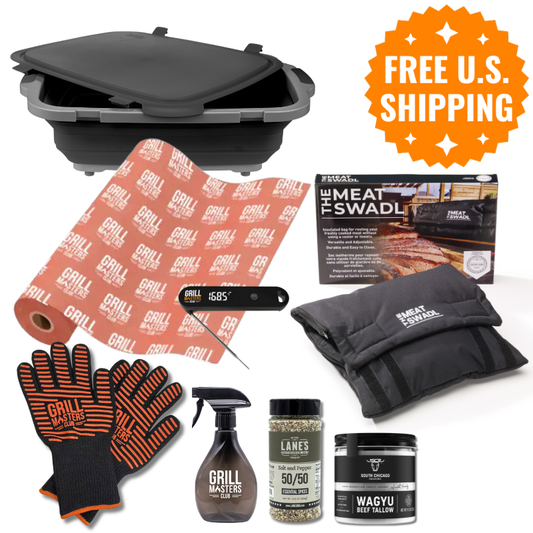
What to spray: apple juice, a 50/50 mix of water and apple cider vinegar, or an oil-based marinade spray. A dedicated Grill Masters Club Spray Bottle keeps your mist fine and even, and it's an easy add to push your cart past the $100 free shipping line.
Don't overdo it. Every time you open the lid you lose heat and add time to the cook. Spray fast, close the lid, and walk away.
Wrapping: Pink Butcher Paper vs Foil vs Naked
When to wrap: by color, not the clock. You're looking for a deep mahogany color and bark that doesn't smear when you scratch it with a fingernail. Internal temp is usually around 160 to 170°F at that point.
Foil is the fastest and most tender option. It essentially braises the ribs, which softens the bark. Add a few pats of butter, a sprinkle of brown sugar or drizzle of honey, and a splash of juice for that sticky, sweet style.
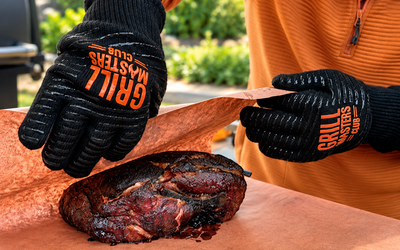
Pink butcher paper breathes. Steam escapes, so you keep more bark while still pushing through the stall. It adds a little time compared to foil, but it's our pick for competition-bite ribs. Grill Masters Club Pink Butcher Paper comes on a 24 inch by 200 foot roll, so you won't run out mid-season.
How to paper wrap ribs:
- Lay out two overlapping sheets about three times the length of the rack.
- Set the ribs meat side down in the center.
- Add a few butter pats or a light drizzle of sauce on the bone side.
- Fold the long sides over the rack, then roll it tight from one end.
- Place it back on the smoker seam side down.
| Wrap | Cook speed | Tenderness | Bark | Best for |
|---|---|---|---|---|
| Foil | Fastest | Most tender | Softest | Fall-off-the-bone fans |
| Butcher paper | Medium | Tender with bite | Keeps most | Competition-style ribs |
| Naked | Slowest | Firmest bite | Best | Offsets and bark lovers |

Sauce and Glaze Timing
Sauce goes on in the last 20 to 30 minutes, after you unwrap. Brush on thin coats, one or two layers, and let each one set. Sugar burns fast above about 265°F, so if you're running hot, keep a close eye on it.
Warm the sauce before it goes on. Cold sauce cools the surface and slows the set. A silicone BBQ mop brush lays down thin, even coats without dragging off the bark.
Glaze vs sauce: for that glassy competition shine, thin your sauce with a little honey or apple juice. Prefer Memphis dry style? Skip the sauce and hit the rack with a final dusting of rub instead.
| Sauce | Style | Pair with |
|---|---|---|
| Riffs Smokehouse Voodoo Child | Competition sweet | Heath Riles Competition Rub |
| Southern Gal's (in the Big Rib Energy box) | Classic sweet and tangy | Old Southern Rib Rub |
| Kinder's Gold Label Bourbon Apple | Sweet bourbon apple | Pappy bourbon stave smoke |

How to Tell When Ribs Are Done (4 Tests Plus a Bite)
- Bend test: pick up the rack from one end with tongs. It should bow deeply and the bark on top should crack.
- Probe or toothpick test: it slides between the bones with almost no resistance, like going into soft butter.
- Bone pullback: about a quarter inch of bone exposed at the ends.
- Temp check: 195 to 200°F for bite-through, 200 to 203°F for fall-off. Probe between the bones without touching bone. A Grill Masters Club Instant Read Thermometer gives you a reading in seconds so the lid isn't open long.
The bite test: slice off one bone and taste it. You want a clean tooth mark, with meat that pulls off with a slight tug.
Troubleshooting: rubbery or tight means not done; give it more time. Mushy means you wrapped too long. Dry, hard ends mean you ran too hot or didn't round off the corners when trimming.
Resting and Slicing
Rest ribs 10 to 15 minutes, loosely tented, so the juices settle. Feeding a crowd and need to hold them? Wrap the rack and tuck it into a Meat Swadl resting blanket, which keeps meat hot for an hour or more while you finish sides.
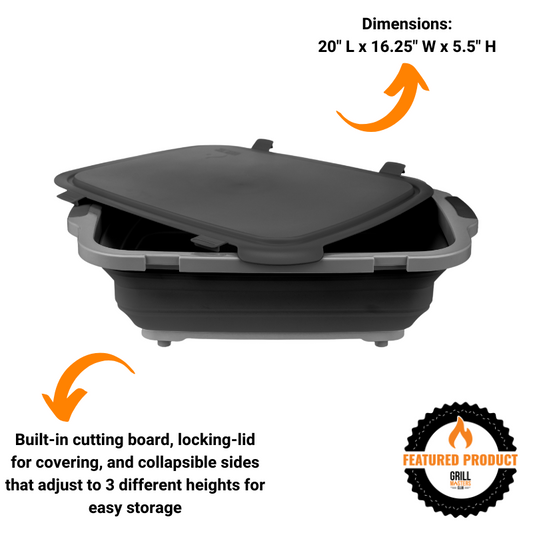
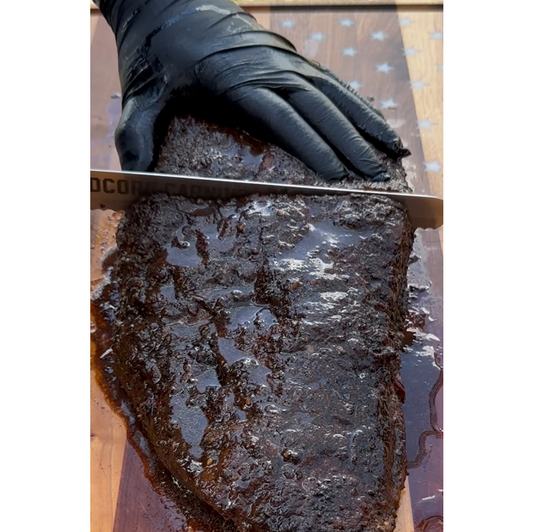
To slice, flip the rack bone side up so you can see exactly where each bone runs. Use a long, sharp knife and make one clean stroke between each bone on a sturdy Grill Masters Club Cutting Board. Sawing back and forth tears the bark.

Sausage on the Side
That row of sausages in the carousel stole the show for a lot of people, and it's a smart move. Sausage fills empty grate space, feeds hungry guests early, and cooks in the same temperature range as ribs.
Raw vs precooked: fresh pork sausage needs to hit 160°F and poultry sausage 165°F, per USDA guidance. Precooked sausage just needs to heat through and soak up smoke.
Method: lay links on the grate or hang them at 225 to 250°F. Raw links take about 1.5 to 2.5 hours. Don't prick the casings or you'll lose the juice. For a snappy casing, finish them for a minute or two over direct heat.
Serve with mustard sauce: Lane's Southbound Sauce brings a tangy Carolina mustard style, and Melinda's Hot Habanero Honey Mustard adds heat.
Side idea: grill thick watermelon wedges over direct heat for a minute per side and dust them with Sweet Heat Seasoning by The Spice Guy. Sweet, smoky, a little spicy, and gone in minutes.
10 Rib Mistakes We Made So You Don't Have To
This is the "decade" section. Every one of these cost us a rack at some point.
- Chasing white smoke. Thick white smoke tastes bitter. Clean, thin blue smoke only.
- Opening the lid every 10 minutes. If you're looking, you're not cooking.
- Leaving the membrane on. Chewy, and it blocks flavor.
- Saucing too early. Burnt sugar is bitter. Last 20 to 30 minutes only.
- Wrapping by the clock. Wrap by color and bark set.
- Two hours in foil on baby backs. That's mush. Use 2-2-1 or shorten the wrap.
- Trusting the dome thermometer. Lid gauges can be off by 25°F or more. Measure at grate level.
- Skipping the rest and slicing meat side up. You'll miss the bones and lose the juice.
- Soaking wood chips. Steam, not smoke.
- Running hot with a high-sugar rub. Lower the temp or lead with a savory layer.
Your Rib Gear Checklist
- Ribs (St. Louis cut recommended)
- Binder or oil-based spray
- Savory base rub plus sweet competition rub
- Apple, hickory, or bourbon stave wood
- Spray bottle
- Pink butcher paper
- Instant read thermometer
- Mop brush and sauce
- Cutting board and long knife
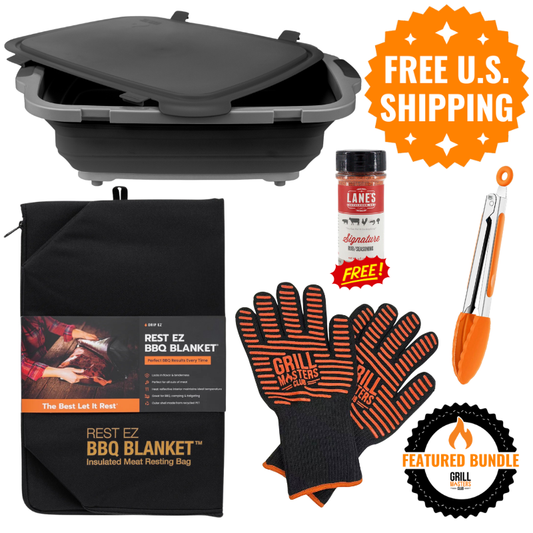
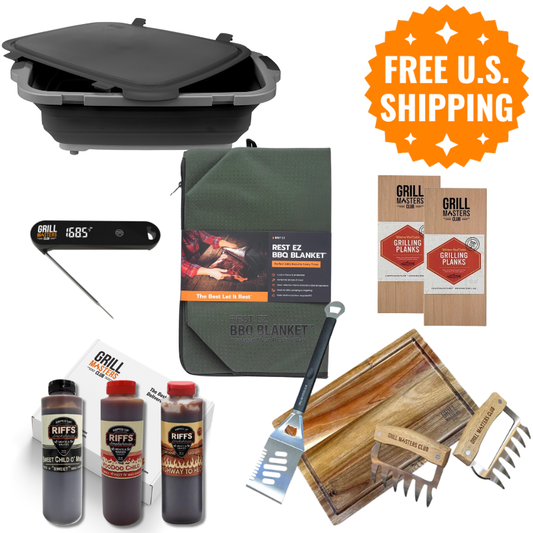
Want the whole rib toolkit at once? The Rack Attack Rib Bundle packs a rib rack, cutting board, competition sauce, seasoning, spray bottle, mop brush, and gloves, and it ships free. Pair it with the Big Rib Energy BBQ Box and you're covered from trim to slice. Use code USA for 10% off.

Next cook: once your ribs are dialed in, try pulled pork with the Pulled Perfection BBQ Box or read our guide to smoking a brisket.
Rib FAQ
How long does it take to smoke ribs at 225°F?
Baby backs take about 5 hours and St. Louis ribs about 6 hours. Use the bend test to confirm.
Should I smoke ribs at 225 or 250?
250°F is the sweet spot for most backyard cooks. It's forgiving, builds great bark, and saves about an hour.
Is the 3-2-1 method good?
It's great if you want fall-off-the-bone spare ribs. It tends to overcook baby backs, so use 2-2-1, or 3-1-1 if you want competition bite.
Butcher paper or foil for ribs?
Foil is faster and more tender but softens bark. Pink butcher paper keeps more bark and still pushes through the stall. We prefer paper.
Do I have to remove the membrane?
Yes. It turns tough and blocks rub and smoke. If it won't peel, score it.
Should ribs be bone side up or down?
Meat side up for most of the cook so the bark stays intact. Wrap meat side down.
What wood is best for ribs?
Apple plus hickory is the classic. Cherry, pecan, and bourbon barrel oak are all excellent.
Is an offset or kamado better for ribs?
An offset gives the most smoke and capacity. A kamado gives steadier temps and better fuel efficiency. Both make championship-level ribs.
What internal temp are ribs done?
195 to 203°F, probed between the bones. The bend test is still the final word.
Can I smoke sausage at the same time as ribs?
Yes. Raw links take 1.5 to 2.5 hours at 225 to 250°F. Cook fresh pork sausage to 160°F.

Skip the decade. Join Grill Masters Club.
Ten years of trial and error, curated into one box. Every themed box is hand picked by our pitmaster panel: 5+ premium rubs, sauces, and tools plus recipes, worth $80+ per box. Choose a delivery every two or three months, and pause or cancel anytime.
Every subscription ships free, and 20% off is applied automatically at checkout. No code needed.
Join 100,000+ Grill Masters
Get weekly recipes, pro tips, and exclusive deals sent straight to your inbox. Plus your free Pit Card download and 10% off your first order.