Cast Iron Care 101: How to Season, Clean, Restore, and Grill with Cast Iron
Last updated: February 2026
Cast Iron Care (TL;DR):
- Season to protect the metal, prevent rust, and create a natural nonstick surface.
- Clean promptly after cooking (warm pan, hot water, brush/scraper).
- Dry completely right away (heat briefly if needed).
- Oil lightly after cleaning to maintain the surface.
- Re-season only when needed (dull, patchy, sticky, or rust spots).
Cast iron cookware has earned its reputation the hard way—through decades (and sometimes generations) of real-world use over fire, coals, burners, and grills. While trends come and go, cast iron remains one of the most reliable, versatile, and rewarding tools a cook or pitmaster can own.
Cast iron is different from stainless steel or nonstick cookware. It doesn’t reward shortcuts. It improves through use, heat, and proper maintenance.
What you’ll learn: how to season cast iron correctly, clean it without stripping the surface, restore rusted pieces, and keep cast iron performing on grills, smokers, and open fire.
Why Cast Iron Is Worth the Effort
Cast iron excels because of its thermal mass. Once it gets hot, it stays hot.
- Create deep, even sears
- Maintain temperature over open flames
- Perform consistently on grills, smokers, and campfires
- Improve with age rather than wear out
With proper care, cast iron cookware can last for decades while improving its cooking surface over time.
Understanding Cast Iron Seasoning (What It Is and Why It Matters)
Seasoning is not flavoring—it’s a chemical process.
Definition: Cast iron seasoning is a bonded, protective layer formed when oil polymerizes on hot cast iron.
When oil is heated past its smoke point on cast iron, it undergoes polymerization, bonding to the metal and forming a hard, protective layer. This layer:
- Prevents rust
- Creates natural nonstick performance
- Protects food from metallic flavors
- Improves durability over repeated cooks
A well-seasoned cast iron surface appears dark, smooth, and semi-glossy. Uneven coloration is normal—especially on grill-used cookware.
How to Season Cast Iron (Step-by-Step)
What You’ll Need
- High smoke point oil (grapeseed, avocado, or refined canola) or a dedicated cast iron seasoning oil
- Lint-free cloth or paper towels
- Oven or grill capable of 450–500°F
Recommended (available in the Pitmaster Shop):
Seasoning Process
- Clean the cast iron with warm water and a cast iron chain mail scrubber, like the Chain Mail Cast Iron Scrubber & Cleaner by Outset (8" x 6"). Dry completely.
- Apply oil in a very thin layer over all surfaces.
- Wipe excess oil until the surface looks almost dry (this prevents stickiness).
- Heat at 450–500°F for 45–60 minutes.
- Cool naturally inside the oven or grill.
Repeat 2–3 times for new or restored cast iron.
Cast Iron Care on the Grill: What’s Different?
Grilling introduces direct flame, grease flare-ups, ash, and rapid temperature changes. Cast iron is built for this environment—but proper care matters.
Best Practices for Grilling with Cast Iron
- Preheat gradually to prevent thermal shock
- Use grill-safe tools that won’t scrape seasoning
- Clean promptly after cooking
- Oil lightly after high-heat cooks
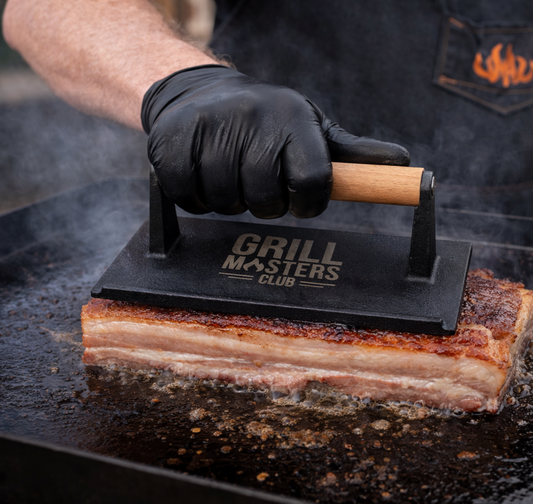
Cast iron griddles, skillets, press plates, and grill pans excel on gas, charcoal, pellet grills, and smokers.
Best Tools for Maintaining Cast Iron
Proper cast iron care is easier with purpose-built tools designed to protect seasoning while removing residue.
New to cooking over fire? Our First Fire BBQ Box includes wagyu beef tallow spray, a high smoke point fat that works well for oiling cast iron between cooks, along with a thermometer, spatula and everything else for a first cook.
- Seasoning / cleaning oil
-
Chainmail or non-abrasive scrubbers
- We suggest the Chain Mail Cast Iron Scrubber & Cleaner by Outset (8" x 6")
- Cast iron-safe brushes and scrapers (to remove cooked-on bits without stripping seasoning)
Using the right tools helps extend the life of your cast iron and maintain consistent performance over time.
How to Clean Cast Iron (Without Ruining It)
Mild soap is safe for cast iron, but many grillers prefer a dedicated cast iron cleaning oil for routine wipe-downs. The real enemies are moisture, neglect, and abrasion.
Routine Cleaning
- Clean while warm (not hot)
- Use hot water and a chain mail scrubber, brush, or scraper
- Use Griddle & Cast Iron Salt Scrub
- Avoid steel wool for daily cleaning
- Dry immediately
After-Clean Care
Once dry, apply a light coat of oil and heat briefly to set the surface. This habit alone prevents most rust issues.
How to Restore Rusty Cast Iron
Rust is not permanent damage—it’s reversible.
- Scrub rust with steel wool or a stiff brush
- Wash and dry thoroughly
- Re-season using the full seasoning process above
Many experienced grillers restore older cast iron because the underlying metal quality is often exceptional.
What Not to Do with Cast Iron
- Do not store wet
- Do not put in the dishwasher
- Do not soak for long periods
- Do not over-oil during seasoning
Frequently Asked Questions
How often should I season cast iron?
Only when the surface looks dry, dull, or uneven. Light oiling after use usually prevents the need for full reseasoning.
Can cast iron go on a grill?
Yes. Cast iron performs exceptionally well on gas, charcoal, pellet grills, and smokers.
What oil is best for cast iron seasoning?
High smoke point oils like grapeseed, avocado, or refined canola work best.
Does cast iron need special care after grilling?
Yes—clean promptly, dry completely, and apply a light oil coat after high-heat cooks.
Final Thoughts
Cast iron improves with consistent care. Whether used on a grill, smoker, or stovetop, proper maintenance ensures reliable performance for years.
For serious grillers, cast iron remains one of the most dependable tools available.
Looking to upgrade your cast iron setup? We have griddles, pans, and maintenance tools available in our Cast Iron Collection.
Want new sauces, rubs and recipes to put your cast iron to work? A Grill Masters Club BBQ subscription delivers a pitmaster-curated box of small-batch sauces, rubs and recipes every two or three months.
Join 100,000+ Grill Masters
Get weekly recipes, pro tips, and exclusive deals sent straight to your inbox. Plus your free Pit Card download and 10% off your first order.